Brevard County, Florida
Garage door repair in Port St. John, FL
Garage door repair in Port St. John, FL is sorted below by what failed: a spring, a cable, the track or the opener. Half the homes in Port St. John were built before 1989 (Census ACS 2019–2023). Port St. John averages 2 days a year with a low at or below 32°F (NOAA 1991–2020 normals).
Call (866) 332-1030 to schedule a visitCalls may be recorded. Describing the problem commits you to nothing.
What stopped working?
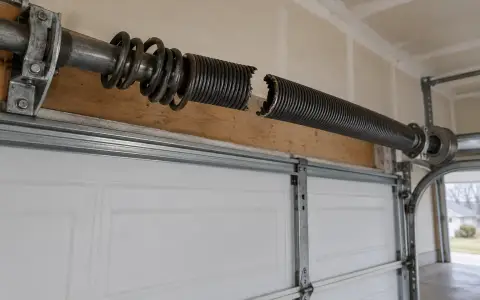 Broken spring
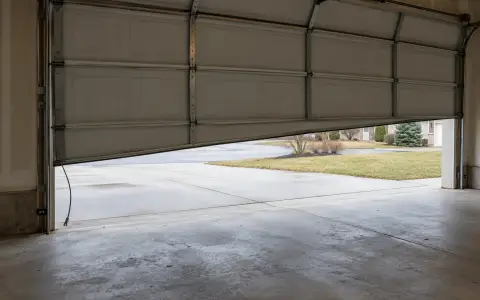 Snapped cable
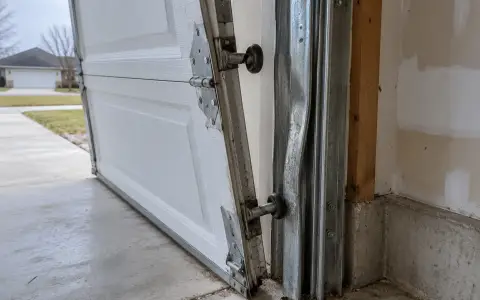 Off track
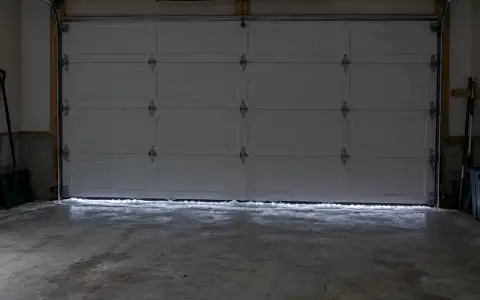 Won't open
 Won't close
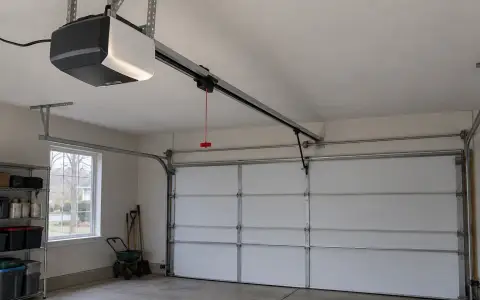 Opener runs, door doesn't
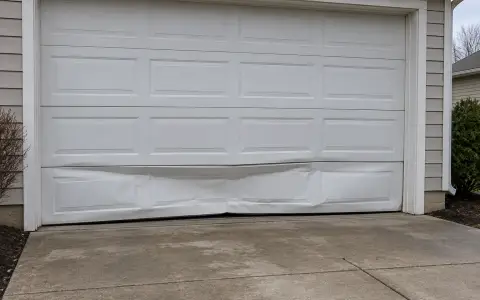 Car hit the door
What is different about Port St. John
Each point below comes from public data on Port St. John or from a rule that applies here, with its source.
Hurricane risk
FEMA's National Risk Index rates hurricane risk very high in Brevard County. A replacement door here should carry a wind-load label in pounds per square foot, and the positive and negative ratings are worth checking against what your building department requires.
Source: FEMA National Risk Index; ICC Building Safety Journal, garage door provisions in the International Residential Code
Openers older than the safety rule
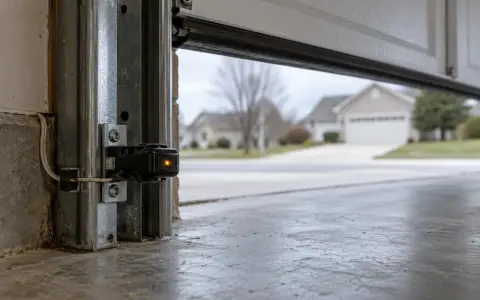
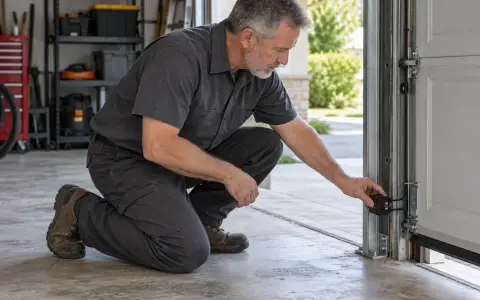
In Port St. John, half the homes went up before 1989, so an opener original to the house can be older than the federal rules. Since January 1, 1991 an opener made for sale has had to reverse when it touches something, and since 1993 it has also needed an external safeguard, usually a pair of photo-eye sensors a few inches off the floor. No sensors by the floor means an older opener: do the reverse test first.
Source: U.S. Census Bureau, American Community Survey 2019–2023 5-year estimates; CPSC Publication 523, non-reversing automatic garage door openers
Who has a garage door
Of the 9,310 households in Port St. John, almost all live in detached houses, which is where a private garage door and opener usually are.
Source: U.S. Census Bureau, American Community Survey 2019–2023 5-year estimates
Mild winters
Port St. John sees 2 days a year when the low reaches 32°F or colder, on average, at the nearest NOAA climate normals station, about 10 miles away. In a freeze, the rubber seal along the bottom of a door can stick to the floor; free it before blaming the opener.
Humid summers
Summers in Port St. John are humid: the July dew point averages 74°F. Damp air rusts spring coils, cables and hinges sooner than dry air does, and swollen wood doors can bind; rust along a spring is a reason for a look before it snaps.
Source: PRISM Climate Group, 1991–2020 normals, July mean dew point
Salt air
Port St. John is about 5 miles from the ocean shore. Salt air corrodes springs, cables, rollers and the opener rail faster than inland air, so galvanized or stainless hardware, and a look at the cables when the door is serviced, matter more here.
Source: Natural Earth coastline, distance from the place centroid
Who licenses the work in Florida
Florida offers a statewide garage door installation specialty license. The state describes it as voluntary: a statewide license a contractor "may obtain instead of acquiring a local specialty license." Where a contractor holds no state license, the county or city decides what local license is needed, so check both the state registry and the local one. Under the state rule, such a contractor may run the low-voltage wiring for door sensors; other electrical work goes to a licensed electrician.
Look up a license with the Department of Business and Professional Regulation (DBPR)
What you will be asked
- The springs: a coil on a bar above the door, or springs along the tracks, and whether one shows a gap.
- The name on the opener’s motor housing, and roughly how old it is.
- Whether the door is open or closed right now, and whether a car is inside.
The line takes calls about repair, replacement and installation of garage doors and openers in Port St. John, from owners and renters, at homes and commercial buildings. It does not take calls about buying parts, doors on box trucks or trailers, or a price over the phone without a visit; the price is named after someone has seen the door.
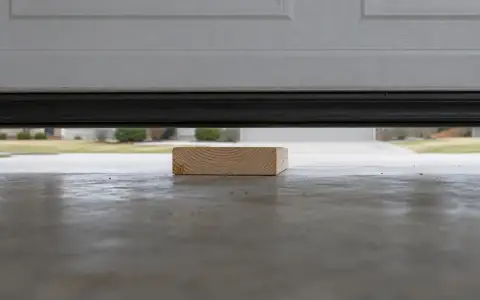 Reverse test
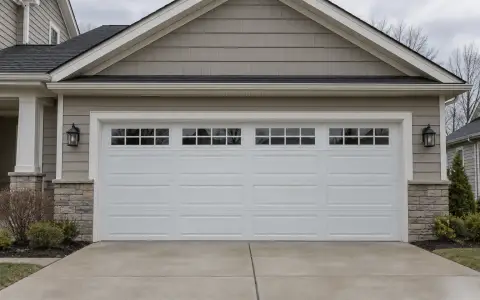 Door replacement
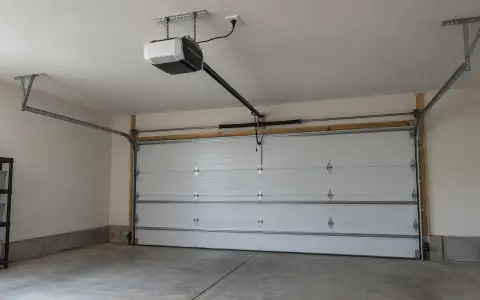 Opener replacement
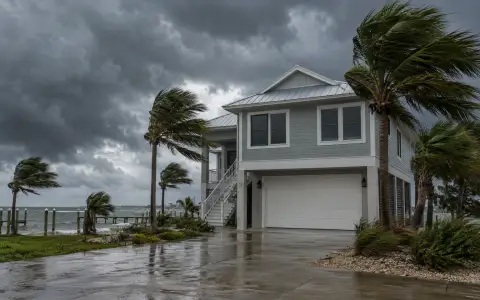 Wind-rated doors
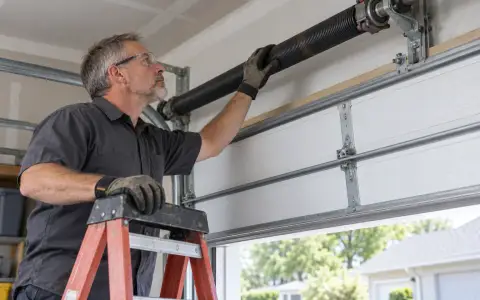 Before you call
Garage doors in Port St. John: questions
How old are the garage doors and openers in Port St. John?
Half the homes in Port St. John were built before 1989, so an opener still original to the house can predate the 1993 rule that added photo-eye sensors. If the door has no sensors near the floor, the opener is older than the rule, and replacing it is the safer call.
Does cold weather affect garage doors in Port St. John?
Not much: Port St. John has only 2 days a year at or below 32°F on average, and calls here are about springs, cables and openers far more than frozen seals.
Does a new garage door in Port St. John need a wind rating?
Ask the building department. FEMA rates hurricane risk here as elevated, and a replacement door should carry a wind-load label. The label on the door's end stile gives its pressure rating.